
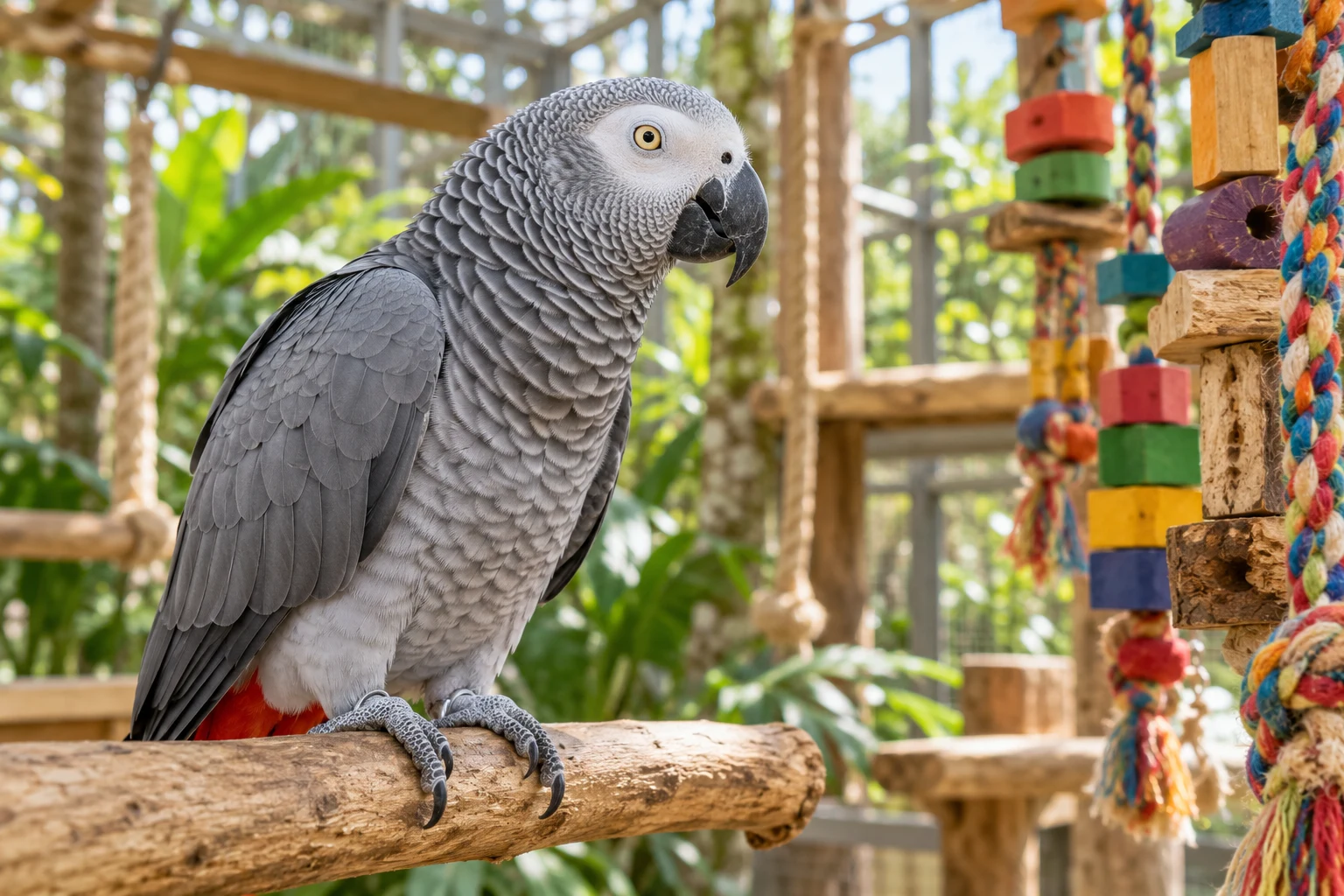
Begin with what holds the bird’s interest.
A useful activity invites a bird to do something: investigate, climb, find food or work on an appropriate chew item. Observe the individual rather than buying a large collection of toys at once. Ask what the bird already knows and enjoys before homecoming. A familiar starting activity can help you learn how it approaches new experiences. Keep enough space available for comfortable movement around the enclosure.
Check suitability and condition.
Choose items appropriate for the species, size and individual behavior. Inspect furnishings and toys for damage, loose components and potential entanglement hazards. Supervise unfamiliar activities and ask an avian professional if you are unsure about a material or design. Introduce changes gradually so the bird can investigate without being pushed toward something frightening. An expensive toy is not automatically a suitable one.
Build variety into a real schedule.
Think about how enrichment fits alongside feeding, cleaning, social interaction and rest. Rotate suitable activities based on what you observe, and involve other responsible caregivers in the routine. If you are comparing parrots for sale, ask how the species’ activity needs will fit your time and space. Our species pages can help you start that comparison before you discuss an individual bird with the team.
General care information. Discuss individual health, diet and care needs with a qualified avian veterinarian.